


Exhaust Tips Explained: Sizes, Styles, Materials and How to Choose the Right Ones

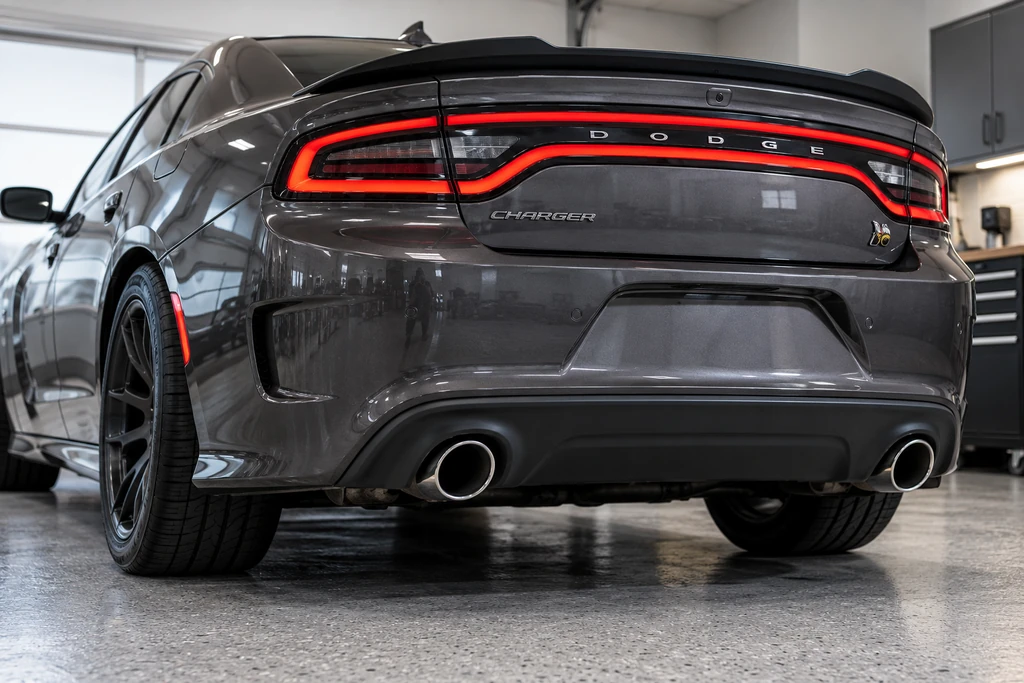
Exhaust tips are the visible ends of your exhaust, the part that pokes out of the bumper (some people call them muffler tips). Picking the right ones comes down to four things: the inlet size that fits your pipe, an outlet size that suits your bumper, a style you like, and a material that survives exhaust heat. Get the inlet right and everything else is taste.
We design, fit and sell exhaust tips for the Dodge Charger and Challenger, so we spend a lot of time under the back of these cars with a socket wrench and a tape measure. This guide is everything we tell owners who ask us what to buy, written so you can follow it even if you have never touched your exhaust before. Most of it applies to any car. The Dodge-specific part comes near the end.
In this guide
- What an exhaust tip is (and what it isn’t)
- Exhaust tip sizes: inlet vs outlet, and how to measure yours
- 3, 4 or 5 inch tips: which looks right on which car
- Styles: single, dual, quad, dual-wall, angle cut, straight cut, rolled edge, turndown
- Materials and finishes: 304 stainless, chrome, carbon fiber, ceramic-coated black
- Bolt-on, clamp-on or weld-on: how exhaust tips mount
- Do exhaust tips change the sound?
- Which of our tips fit your Dodge
- How to install exhaust tips in about 15 minutes
- How to keep black exhaust tips looking new
- FAQ
What an exhaust tip is (and what it isn’t)
Your exhaust system carries hot gas from the engine to the back of the car. Along the way it passes through the catalytic converter (cleans the gas), the resonator (takes out certain droning frequencies) and the muffler (cuts the overall volume). The tip is the last few inches, the piece you can see. If you want the full tour of every part, our guide to exhaust components, part names and what each one does covers it.
A tip has three real jobs:
- Looks. It finishes the back of the car. A small, plain pipe end looks unfinished. A tip that fills the bumper opening looks like it was meant to be there.
- Protecting the bumper. It points hot gas and soot away from the paint and plastic.
- A small effect on tone. A larger or resonated tip can change the sound slightly. More on that below.
What a tip won’t do is add horsepower. Power comes from how freely the whole system flows, and a tip sits after every restriction that matters. Anyone selling a tip as a power upgrade is selling you a story.
Exhaust tip sizes: inlet vs outlet, and how to measure yours
Every tip has two sizes, and mixing them up is the most common mistake we see.
- Inlet is the end that slides over (or onto) your exhaust pipe. It has to match the pipe. This is the number that decides whether the tip fits.
- Outlet is the end you see. It decides how the tip looks. This is the number people mean when they say “5 inch tips”.
Two more measurements matter on some tips. Length tells you how far the tip will stick out past the bumper. Offset (on some tips the outlet is not centered on the inlet) changes where the outlet sits in the opening.
How to measure your exhaust pipe
- Let the car sit until the pipe is cold. Exhaust pipes stay hot for a long time after a drive.
- Measure the outside diameter of the pipe right where the tip will go. A pair of calipers is best. A tape measure works if you are careful to measure straight across the widest point.
- No calipers? Wrap a strip of paper around the pipe, mark where it overlaps, measure that length and divide by 3.14. That gives you the diameter.
- Buy a tip whose inlet inside diameter matches that number. A clamp-on tip usually has a little room so it slides over, which is why many list a range, for example “fits 2.25 to 2.5 inch pipe”.

If your car already has a factory tip, measure the pipe it is attached to, not the old tip. The old tip’s outlet tells you nothing about what the new one needs to fit onto.
3, 4 or 5 inch tips: which looks right on which car
The outlet size is mostly about proportion. A tiny tip in a big bumper cut-out looks lost. A huge tip on a small hatchback looks like a joke, sometimes on purpose. This table is the starting point we use. It shows typical combinations, not hard rules, so always confirm your own pipe size.
| Pipe (inlet) size | Outlet size that usually looks right | Cars it typically suits |
|---|---|---|
| 1.75 to 2 inch | 2.5 to 3 inch | Small economy cars, older compacts |
| 2.25 to 2.5 inch | 3 to 4 inch | Compact and midsize cars, most four-cylinder sedans and coupes |
| 2.5 to 3 inch | 4 to 4.5 inch | Sport compacts, V6 sedans and coupes, many performance cars |
| 3 inch and up | 4 to 5 inch | V8 muscle cars with large bumper openings (Charger, Challenger, Mustang GT, Camaro SS) |
| 4 to 5 inch | 5 to 7 inch and up | Full-size trucks, diesel trucks |
4 inch exhaust tips
Four inches is the safe middle. It fills the opening on most sedans and coupes without looking oversized, and it is the most common size for quad setups, where two tips sit side by side on each side of the bumper. Two 4-inch outlets per side read as wide and aggressive while each one stays a sensible size.
5 inch exhaust tips
Five inches is for cars with big bumper cut-outs, which is why it is popular on V8 muscle cars and trucks. The test is simple: hold a tape measure in the opening. If a 5-inch circle leaves an even gap of half an inch or so all round, it will look factory. If it touches the edges or sits off-center, go smaller. On the V8 Charger, the round cut-outs in the lower valance are sized so that a 5-inch tip fills them properly, and that is exactly why we made our Charger tips that size.
Styles: single, dual, quad, dual-wall, angle cut, straight cut, rolled edge, turndown
Style covers two things: how many outlets you have, and what the end of each tip looks like.
Single, dual and quad exhaust tips
- Single: one tip on one side. Standard on most economy cars.
- Dual exhaust tips: this term means two different things, so check the listing. It can mean one tip on each side of the car (true dual), or one pipe that splits into two outlets on the same side. Both look good. Only the first one is a true dual exhaust system.
- Quad exhaust tips: four outlets, usually two on each side. Common on performance trims. You can get a quad look on a dual system with tips that split each pipe into two outlets, which is how our Challenger tips work.
Single-wall vs dual-wall exhaust tips
A single-wall tip is one layer of metal. A dual-wall tip has an inner tube and an outer shell with a small gap between them. The outer shell stays cooler, so it discolors less, and the thick lip looks more finished from behind. Dual-wall costs a little more and is worth it on any tip larger than about 3.5 inches.
Angle cut vs straight cut exhaust tips
- Straight cut: the end is square to the pipe. Clean and simple, and it suits round bumper cut-outs because the outlet sits flat to the opening.
- Angle cut (slash cut): the end is cut at an angle, usually 15 to 30 degrees. It looks sportier from the side. It has to be installed with the long side at the right position (usually the bottom or outside) or it looks odd.
Rolled edge, intercooled and turndown
- Rolled edge: the lip curls inward. It hides the raw edge of the metal and looks thicker. Very common on dual-wall tips.
- Intercooled: a rolled-edge tip with slots or vanes around the inner tube. Purely a style choice.
- Turndown: a short tip that points the gas down at the ground. Mostly for trucks, to keep fumes away from the tailgate. You rarely see one from behind.
Materials and finishes: 304 stainless, chrome, carbon fiber, ceramic-coated black
This is where cheap tips and good tips separate. Exhaust gas at the tip is hot enough to discolor metal and burn off some coatings, and the tip also takes road salt, water and soot. Here is what each material does over time.
| Material / finish | Looks | How it ages | Our take |
|---|---|---|---|
| 304 stainless steel (polished or brushed) | Bright silver | Resists rust very well. The polished finish can turn gold or blue near the pipe from heat. | The best base material for a tip. Check it says 304, not just “stainless”. |
| 409 stainless steel | Duller silver | Cheaper grade. Gets surface rust over time, especially in salt states. | Fine for hidden pipe, not our choice for something you look at. |
| Chrome-plated steel | Mirror shine | Looks great new. Can pit, peel or rust once the plating is chipped. | Cheap tips are often chrome over mild steel. Avoid in winter climates. |
| Black paint or powder coat | Matte or gloss black | Can fade to gray or brown near the outlet, where the heat is highest. | The reason many black tips look tired after a year. |
| Ceramic-coated black over 304 stainless | Deep black | The coating is made for exhaust heat, so it holds its color much longer. Stainless underneath if the coating is ever scratched. | What we use on our tips. The best black option. |
| Carbon fiber | Woven carbon look | Usually a carbon sleeve over a metal inner tube. The clear coat can yellow from heat over the years. | Looks great on European and import builds. Pricey. |
| Titanium (burnt) | Blue and purple heat colors | Light and very heat resistant. The colors are part of the look. | Expensive and loud in style, which is the point. |
Black exhaust tips: why the coating matters
Black exhaust tips are the most popular look on muscle cars right now, and also the finish most likely to disappoint. The difference is the coating. A high-temperature paint or a standard powder coat goes on easily but the edge closest to the exhaust gets hottest, and that is where it fades first. A ceramic coating is built to take that heat. When we chose the finish for our Charger and Challenger tips, we went with ceramic-coated black over 304 stainless for exactly this reason. If the black ever gets a deep scratch, the metal underneath still won’t rust.
Bolt-on, clamp-on or weld-on: how exhaust tips mount
There are three ways to attach a tip. Which one you need depends on your car and how permanent you want it.
| Mount type | How it attaches | Tools | Good for |
|---|---|---|---|
| Bolt-on (direct fit) | Replaces the factory tip and uses the factory clamp | Basic socket set | Cars with separate factory tips, like the V8 Charger and Challenger |
| Clamp-on (slip-on) | Slides over the pipe and tightens with its own clamp or set screws | Screwdriver or Allen key, sometimes a hacksaw | Universal tips on cars where the pipe end is exposed |
| Weld-on | Welded to the end of the pipe | Welder, or a trip to an exhaust shop | Custom systems and permanent installs |
Are clamp-on exhaust tips secure?
A good clamp-on tip that matches your pipe size and is tightened properly stays put. The problems come from a loose fit. A tip that is too big for the pipe needs a lot of clamping force, rattles, and can work loose and fall off on the highway. Buy the right inlet size, tighten it fully, and check it again after the first few drives once the metal has heated and cooled.
Weld-on exhaust tips
Welding is the most permanent option and the only sensible one on some custom systems. Any exhaust shop can do it in a few minutes. The downside is that you can’t easily swap the tips later, and a stainless tip should be welded with the right filler to avoid rust at the weld.
Do exhaust tips change the sound?
Slightly, and less than most people hope. The sound of your car is set by the engine, the mufflers and the resonators. A tip can change the character of what comes out a little: a larger outlet can make the note sound slightly deeper, and a resonated tip (one with sound-absorbing packing inside) can take some rasp out. On our Charger and Challenger tips, owners tell us the tone changes a little, but nobody will think you fitted a new exhaust.
If you want a real change in sound, that comes from the mufflers. Our mid-muffler delete guide for the Charger and Challenger covers the cheapest big change, and the straight pipe guide covers the loudest one. For the full answer on tips and sound, with what to expect from each type, see will exhaust tips change the sound of your car.
Which of our tips fit your Dodge
The Charger and Challenger are among the easiest cars there are for a tip upgrade, because the V8 models have separate factory tips held on with collar clamps. That means a direct bolt-on swap with no cutting. The V6 cars are a different story.
| Car | Years | Trims that fit our tips | Our tip | Notes |
|---|---|---|---|---|
| Dodge Charger | 2017–2023, plus the 2015–2016 Hellcat | R/T, Scat Pack, SRT, Hellcat (V8) | Single 5-inch per side, ceramic-coated black | Needs the round exhaust cut-outs in the lower valance. Reuses the factory collar clamps. |
| Dodge Challenger | 2017–2023 | R/T, Scat Pack, SRT, Hellcat (V8) | Quad style, two 4-inch outlets per side, ceramic-coated black | Bolts on with the factory collar clamps. Can also be welded onto many aftermarket systems. |
| Charger / Challenger V6 | All | SXT, GT | Not compatible | Different exhaust layout and bumper. Our tips won’t fit. |
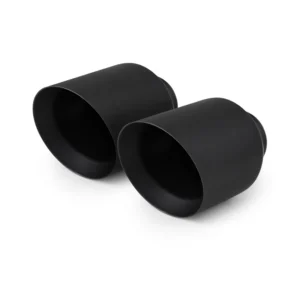
On the Charger, the factory tips look small inside the big round openings in the valance. Our 5-inch black exhaust tips for the 2017–2023 V8 Charger (they also fit the 2015–2016 Hellcat) are sized to fill those openings, which is the whole point of the swap. If your lower valance doesn’t have round cut-outs, they won’t fit.
GridReady product
Dodge Charger 5-inch Black Exhaust Tips
- Fits 2017–2023 V8 Charger (R/T, Scat Pack, SRT, Hellcat) and the 2015–2016 Hellcat
- Ceramic-coated black over 304 stainless steel
- Bolt-on with the factory clamps, no cutting or welding
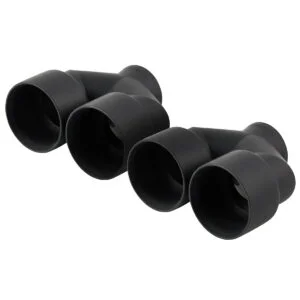
On the Challenger, we went for a quad look: each side splits into two 4-inch outlets, which fills the wide rear valance better than one big round tip. See the black quad exhaust tips for the 2017–2023 V8 Challenger for photos from every angle.
GridReady product
Dodge Challenger Black Quad Exhaust Tips
- Fits 2017–2023 V8 Challenger (R/T, Scat Pack, SRT, Hellcat)
- Quad look: two 4-inch outlets per side, left and right set
- Ceramic-coated black, bolt-on with the factory clamps
Not sure which trim you have, or whether your car still has the factory exhaust? Send us a message with a photo of the back of the car before you order. We would rather answer a question than handle a return.
How to install exhaust tips in about 15 minutes
This is the install for a bolt-on tip that reuses the factory clamp, like ours on the V8 Charger and Challenger. A clamp-on universal tip follows the same idea. Plan on 15 minutes per side the first time, less once you have done one.
What you need
- A socket set with an extension (check the size of your clamp nut before you start)
- Penetrating oil, such as PB Blaster or WD-40 Specialist
- Gloves and eye protection (rust and soot fall in your face)
- A rag and some soapy water
- Optional: a rubber mallet and a light
You don’t need to lift the car on most Chargers and Challengers. The clamps are reachable from behind the bumper. If your car is lowered, a pair of ramps makes it easier.
Step by step
- Work on a cold car. Wait at least an hour after driving. The tips get hot enough to burn you.
- Spray the clamp. Soak the clamp nut and the joint between tip and pipe with penetrating oil. Give it ten minutes, longer if you live where they salt the roads.
- Loosen the factory clamp. Back the nut off until the clamp is loose. You don’t need to remove it completely.
- Remove the old tip. Twist it back and forth while pulling it toward you. If it is stuck, a few light taps with a rubber mallet help. Never hit the pipe hard or pry against the bumper.
- Clean the pipe end. Wipe off soot and loose rust so the new tip slides on evenly.
- Fit the new tip. Slide it on through the factory clamp to the same depth as the old one.
- Line it up. Step back and look from directly behind the car. Center the tip in the bumper opening so the gap is even all round, and set it level.
- Tighten the clamp. Snug it down firmly. Don’t overtighten so hard that you crush the tip.
- Check it. Start the car and let it idle. Listen for any ticking or rattling and look for gaps. Then check the clamp again after your first drive, once everything has heated and cooled.

Keep your old tips in the garage. If you ever sell the car or need to take it back to stock, the swap goes the other way in the same 15 minutes.
How to keep black exhaust tips looking new
Black tips show soot more than polished ones, but they are easy to keep clean if you don’t fight them with the wrong products.
- Only clean them cold. Cleaners flash off on a hot tip and leave marks.
- Use car soap and a soft brush or microfiber. For soot inside the outlet, a diluted all-purpose cleaner on a microfiber wrapped round your fingers works well.
- Skip anything abrasive. No steel wool, no metal polish, no scouring pads. They cut through the coating.
- Keep strong wheel acids off them. Rinse straight away if wheel cleaner overspray lands on the tips.
- Rinse off road salt in winter. Even on stainless, salt sitting in the joint between tip and pipe is what makes clamps seize.
- Optional: a ceramic spray sealant made for exhaust tips makes the next clean even easier.
A little gray haze on the very edge of the outlet after a lot of hard driving is normal for any black tip. A ceramic coating slows it down a lot compared with paint.
Related guides
- Will exhaust tips change the sound? What to expect from each type of tip
- Exhaust components explained: every part from manifold to tailpipe
- Dodge Challenger and Charger mid-muffler delete guide
- Muffler delete: good idea or not?
FAQ
What size exhaust tip do I need?
Match the tip’s inlet to the outside diameter of your exhaust pipe, then pick an outlet size that fills your bumper opening with an even gap. Most cars have a 2.25 to 3 inch pipe. Measure your own pipe rather than going by the car model, because aftermarket systems often change it.
Are 5 inch exhaust tips too big?
On a car with large bumper cut-outs, such as a V8 Dodge Charger, 5-inch tips look factory. On a small car with no cut-out, they can look oversized. Measure the opening: if a 5-inch circle leaves a small even gap all round, it is the right size.
Do exhaust tips rust?
Tips made from 304 stainless steel resist rust very well. Chrome-plated mild steel and 409 stainless can rust, especially in states that salt the roads. The clamp area rusts first, so rinse it off in winter.
Do black exhaust tips fade?
Painted or powder-coated black tips often fade to gray near the outlet, because that edge gets the most heat. Ceramic-coated tips hold their color much longer because the coating is made for exhaust temperatures.
Can I install exhaust tips myself?
Yes. A bolt-on or clamp-on tip needs only basic hand tools and about 15 minutes per side. Weld-on tips need a welder, so most people have an exhaust shop fit those.
Are clamp-on exhaust tips secure?
Yes, if the inlet matches your pipe size and the clamp is fully tightened. Re-check the clamp after the first few drives, because the metal expands and shrinks as it heats and cools.
Are exhaust tips worth it?
If your stock tips are small, dull chrome, or sit deep inside a big bumper opening, yes. Tips are the cheapest way to change how the back of the car looks, and a bolt-on set goes on in about half an hour. If you mainly want a louder car, spend the money on the exhaust itself, because a tip on its own changes the sound very little.
Do exhaust tips affect performance?
Not in a way you can feel. A tip with the right inlet size adds no real restriction, so horsepower and fuel economy stay the same. A tip that is narrower than your pipe can add a little back pressure, which is one more reason to measure before you buy.

2 thoughts on “Exhaust Tips Explained: Sizes, Styles, Materials and How to Choose the Right Ones”