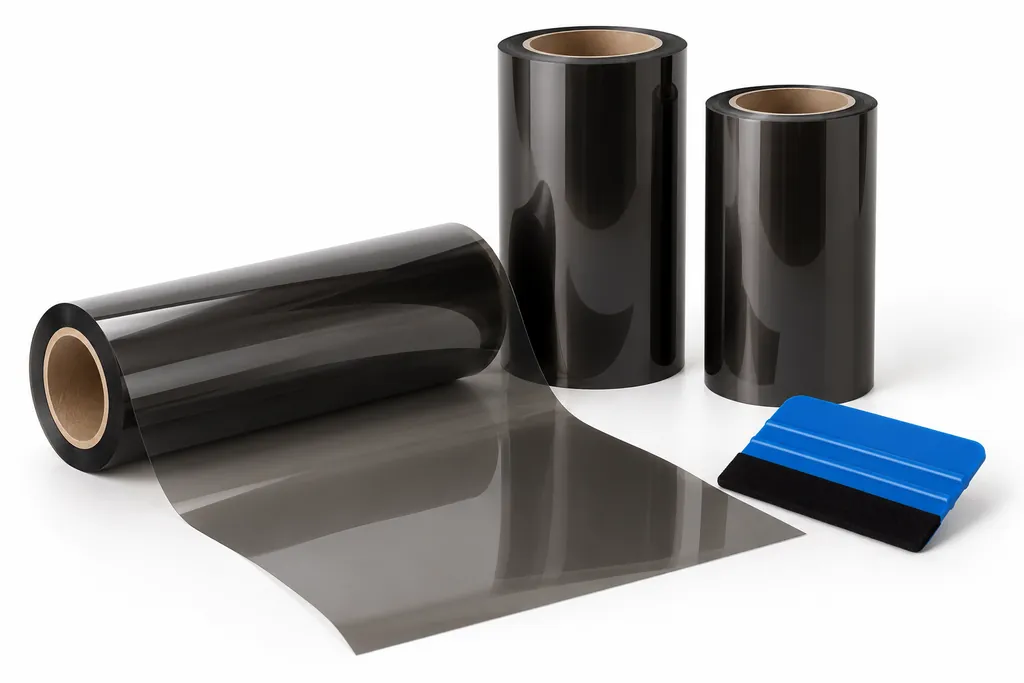
Are Tinted Tail Lights Legal? Tail Light Tint Laws by State (2026)

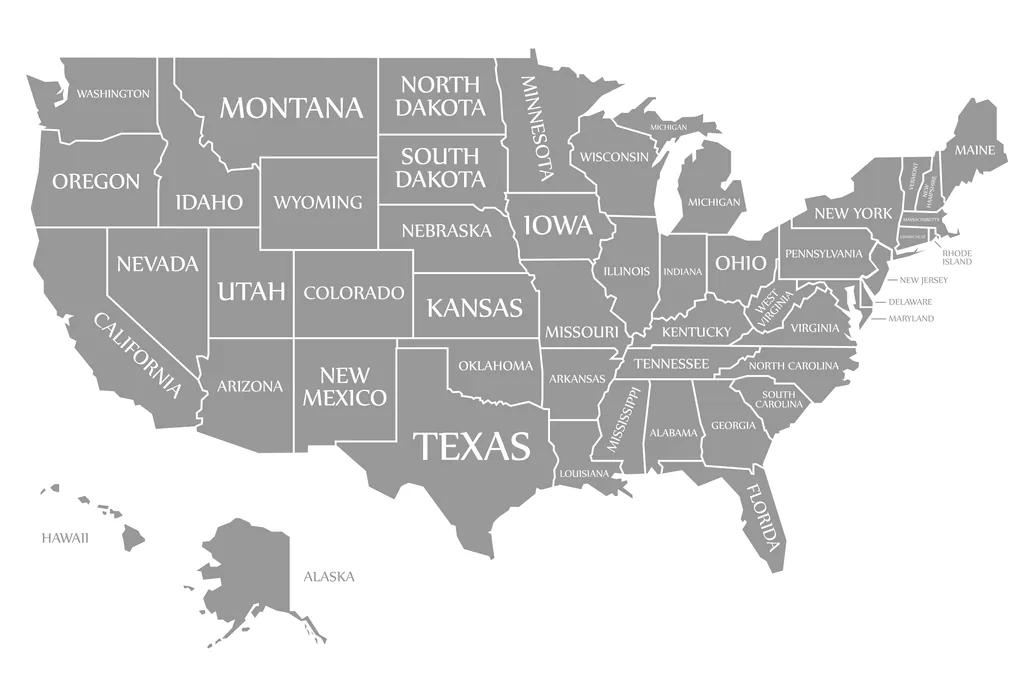
Is tail light tint legal? In most states there is no law that names tail light tint, but every state requires your tail lights to show red and to be visible from a set distance behind the car, usually 500 or 1,000 feet. A light tint that keeps your lights bright passes that test. A dark tint that dims them can get you a ticket. A handful of states go further: Illinois bans any smoked or tinted lens or cover outright, Minnesota bans any covering that isn’t clear, and Florida and Montana ban coverings that reduce how far your tail lights can be seen. Our table below covers all 50 states and Washington, DC.
We make pre-cut tail light tint kits for the Dodge Charger, Challenger and Durango, as well as for Honda, Toyota and Subaru models, so this is the question we get most, usually right before someone orders. Below is what the law actually checks, what the federal rules say, what the law says in all 50 states and DC (with the statute for each one), and how to run your tint without getting pulled over for it.
This is not legal advice. Laws and how police enforce them change, and a local officer or inspector has the final say. We last checked the statutes in this guide in October 2026.
In this guide
- Are tinted tail lights illegal? The short answer
- Our tail light tint kits and the law
- What tail light laws actually regulate
- Federal rules (FMVSS 108) vs state law
- Tail light tint laws by state
- Headlight tint laws: stricter than tail lights
- Light smoke vs dark smoke, and inspection
- How to stay legal with tinted tail lights
- FAQ
Are tinted tail lights illegal? The short answer
Tinted tail lights are not illegal everywhere, but they are not legal everywhere either. It depends on two things: how dark the tint is, and which state you drive in.
| Type of state rule | What it means for tinted tail lights | Examples we checked |
|---|---|---|
| Outright ban on tinted lenses or covers | Any tint on any light is a violation, even a light one. | Illinois, Minnesota (unless the material is clear) |
| Ban on coverings that reduce visibility or change the color | Tint is a violation if it dims the light or changes its color. | Florida, Montana, Pennsylvania |
| Inspection rules that reject tinted covers | Tint fails the safety inspection, even if the statute doesn’t mention it. | Virginia, Vermont, Maine |
| Visibility distance only | Legal as long as the lights still show red from the required distance. Dark tint can fail that. | Most states, including California, Ohio, North Carolina, Georgia and Michigan |
| Follows the federal lighting standard | Anything that impairs a required lamp can be cited. | Texas |
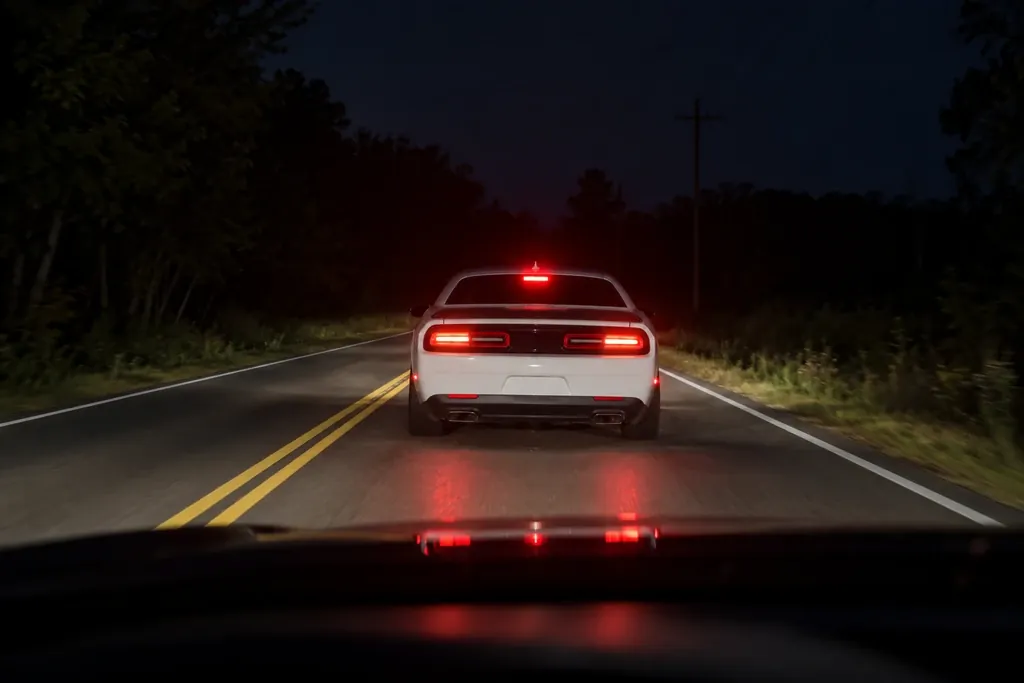
In practice, most tickets for tinted tail lights happen at night, when an officer behind you can’t clearly see your tail lights or brake lights. That is the real test in almost every state: can the driver behind you see your lights early and clearly?
Our tail light tint kits and the law
We want to be straight with you here, because we would rather lose a sale than have you get a ticket. Tail light tint kits in general, ours included, are sold for show and off-road use, and whether you can drive on them depends on your state. Our kits are a dark smoke vinyl. So before you drive on any tint kit:
- Check your state’s rule in the state table below. A few states ban tinted covers on lights altogether.
- Do the night test. Make sure your tail lights and brake lights still show clearly red from the distance your state requires (we explain how below).
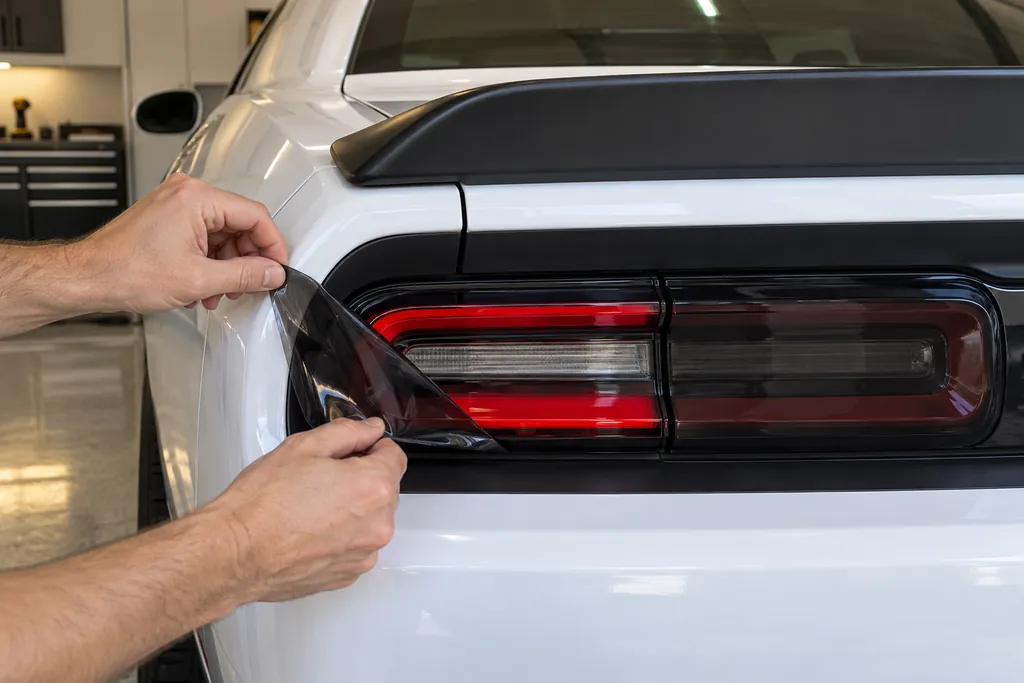
- Remember it comes off. The vinyl can be removed easily in a few minutes with no residue. If you get a warning, move states or need to pass an inspection, you can take it off the same day and put a fresh set back on later.
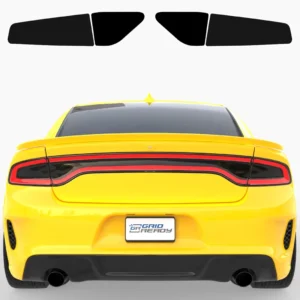
Our pre-cut tail light tint for the 2015–2023 Dodge Charger fits every trim from SXT to Hellcat and goes on dry in about 30 minutes.
GridReady product
Dodge Charger Tail Light Tint Kit
- Fits every 2015–2023 Charger, SXT to Hellcat
- Dark smoke vinyl, easy to remove
- Squeegee, towel, practice pieces and install instructions included
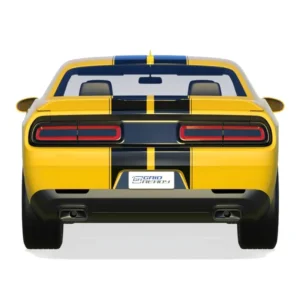
For the Challenger, our tail light tint kit for the 2015–2023 Dodge Challenger also includes overlays for the side markers and rear reflectors. Keep in mind that reflectors and side markers are required equipment too, so the same visibility rules apply to them.
GridReady product
Dodge Challenger Tail Light Tint Kit
- Fits every 2015–2023 Challenger, SXT to Hellcat
- Tail light, side marker and reflector overlays
- Labeled pieces, practice overlays and tools included
Our tail light tint for the 2014–2027 Dodge Durango covers the inner part of each tail light, so the outer edge of the light stays untinted.
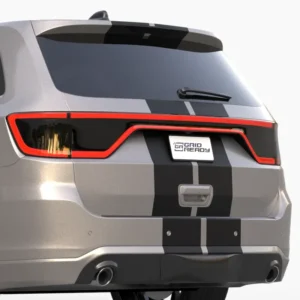
GridReady product
Dodge Durango Tail Light Tint Kit
- Fits every 2014–2027 Durango
- Dry install, air-release channels
- Extra overlays included for practice
You can see every car we make tint for, including Honda, Toyota and Subaru, in our tint kits collection.
What tail light laws actually regulate
Almost no state law mentions “tint” for tail lights. Instead, the laws describe what your rear lights must do, and tint either lets them do it or it doesn’t. Four things come up again and again:
- Color. Tail lights and brake lights must show red. A tint that turns the light brown or near black can break this rule even if the light is still bright enough.
- Visibility distance. Most states say your tail lights must be “plainly visible” from 500 feet behind the car at night. Some, like California for cars built after 1969 and Florida, require 1,000 feet.
- Coverings. Some states ban anything placed over a light that changes how it works. This is the rule that catches tint most directly.
- Reflectors and plate light. Your rear reflectors must still reflect, and the license plate must stay lit with white light and be readable, usually from 50 feet.
Brake lights matter more than tail lights in practice. Tail lights are on all the time at night, so they are dim by design. Brake lights are much brighter and have to warn the driver behind you in daylight too. A tint that looks fine on your tail lights at night can make your brake lights hard to see on a sunny afternoon.
Federal rules (FMVSS 108) vs state law
The federal standard for vehicle lighting is Federal Motor Vehicle Safety Standard No. 108, found at 49 CFR 571.108. It sets the color, brightness and position of every required light on a new car. It also says no extra lamp, reflector or other device may be added if it impairs the effectiveness of the required lighting.
Here is the part most people get wrong. FMVSS 108 applies to the companies that build and sell cars and parts. A separate federal law, known as the “make inoperative” rule (49 U.S.C. 30122), stops manufacturers, dealers and repair businesses from disabling required safety equipment. The National Highway Traffic Safety Administration (NHTSA) has said in its interpretation letters that these rules do not apply to what an individual owner does to their own car, and that the states have the authority to regulate those changes.
So in practice:
- A shop that tints your tail lights so dark they no longer meet the standard could be breaking federal law.
- You, tinting your own tail lights, are covered by your state’s vehicle code, not by the federal rules directly.
- Some states, like Texas, write the federal standard into their own law, so the federal rules end up applying to you anyway.
Tail light tint laws by state (all 50 states and DC)
This table shows what each state requires from your tail lights, the law it comes from, and whether the state has a periodic safety inspection where an inspector looks at your lights. Rules in bold deal with covers or tint directly. Everywhere else, the test is the distance: if your tinted lights are still clearly red from that far back at night, you meet the rule. We read each statute or rule in October 2026. Laws and inspection programs change, so check the current text before you rely on it.
| State | What the law requires | Law | Safety inspection |
|---|---|---|---|
| Alabama | Red tail lamp, visible from 500 feet. | Ala. Code § 32-5-240(c) | No |
| Alaska | Two red tail lamps, visible from 1,000 feet. | 13 AAC 04.025 | No |
| Arizona | Red tail lamp, visible from 500 feet. | A.R.S. § 28-925 | No |
| Arkansas | Two red tail lamps, visible from 500 feet. | Ark. Code § 27-36-215 | No |
| California | Red, visible from 1,000 feet on cars built after 1968. No device that changes how a required light works. | Cal. Veh. Code §§ 24600, 26101 | No (smog check only) |
| Colorado | Red tail lamps, visible from 500 feet. | C.R.S. § 42-4-206 | No |
| Connecticut | Two red tail lamps, visible from 1,000 feet. | Conn. Gen. Stat. § 14-96c | No |
| Delaware | Red tail lamp, visible from 500 feet. | 21 Del. C. § 4334 | Yes, every 2 years |
| District of Columbia | Every light and reflector on the rear must show red. We couldn’t confirm a set distance. | 18 DCMR § 708 | No |
| Florida | Red, visible from 1,000 feet. No covering over a tail lamp that changes that. | Fla. Stat. § 316.221 | No |
| Georgia | Two red tail lights (500 feet for cars built before 1954). | O.C.G.A. § 40-8-23 | No |
| Hawaii | Two red tail lights, visible from 200 feet. | HRS § 291-31 | Yes, yearly |
| Idaho | Red tail lamps, visible from 500 feet. | Idaho Code § 49-906 | No |
| Illinois | Red, visible from 500 feet. Any smoked or tinted lens or cover on any light is banned. | 625 ILCS 5/12-201, 5/12-212(d) | No |
| Indiana | Red tail lamp, visible from 500 feet. | Ind. Code § 9-19-6-4 | No |
| Iowa | Red rear lamp, visible from 500 feet. Original lights must be kept working. | Iowa Code § 321.387 | No |
| Kansas | Two red tail lamps, visible from 1,000 feet. | K.S.A. 8-1706 | No |
| Kentucky | Two red rear lights, visible from 500 feet. | KRS 189.050 | No |
| Louisiana | Red tail lamp, visible from 1,000 feet. | La. R.S. 32:304 | Yes, until the end of 2026 (ends for most cars on January 1, 2027) |
| Maine | Two red rear lights, visible from 100 feet. Inspection rules ban tinted film or material that cuts the light from a lamp. | 29-A M.R.S. § 1905; 16-222 C.M.R. ch. 1 | Yes, yearly |
| Maryland | Two red tail lamps, visible from 1,000 feet. | Md. Code, Transp. § 22-204 | Only when a used car is sold |
| Massachusetts | Two red rear lights. | M.G.L. c. 90, § 7 | Yes, yearly |
| Michigan | Red rear lamp, visible from 500 feet. | MCL 257.686 | No |
| Minnesota | Two red tail lamps, visible from 500 feet. No material covering a tail lamp unless it is clear and colorless. | Minn. Stat. §§ 169.50, 169.64 subd. 10 | No |
| Mississippi | Red rear lamp, visible from 500 feet. | Miss. Code § 63-7-13 | No |
| Missouri | Two red rear lamps, visible from 500 feet. | RSMo § 307.075 | Yes, every 2 years (newer, low-mileage cars exempt) |
| Montana | Two red tail lamps, visible from 1,000 feet. No lens or plastic covers, and no tinted material that reduces visibility. | MCA § 61-9-204 | No |
| Nebraska | Red tail lamps, visible from 500 feet. | Neb. Rev. Stat. § 60-6,219 | No |
| Nevada | Red tail lamps, visible from 500 feet. | NRS 484D.115 | No |
| New Hampshire | Red tail lamps, visible from 1,000 feet. | RSA 266:44 | Suspended since February 2026 while a court case runs |
| New Jersey | Two tail lamps, which must be red. | N.J.S.A. 39:3-61, 39:3-50 | No (emissions test only) |
| New Mexico | Red tail lamps, visible from 500 feet. | NMSA § 66-3-805 | No |
| New York | Two red rear lamps, visible from 1,000 feet. | N.Y. VTL § 375(2)(a)(3) | Yes, yearly |
| North Carolina | Red rear lamps, visible from 500 feet. | N.C.G.S. § 20-129(d) | Yes, yearly |
| North Dakota | Red tail lamps, visible from 1,000 feet. | N.D.C.C. § 39-21-04 | No |
| Ohio | Red tail light, visible from 500 feet. | Ohio Rev. Code § 4513.05 | No |
| Oklahoma | Two red tail lamps, visible from 1,000 feet. | 47 O.S. § 12-204 | No |
| Oregon | Red tail lights, visible from 500 feet. | ORS 816.080 | No |
| Pennsylvania | Red, seen from 500 feet. Nothing that obscures the lamp or changes its color. | 67 Pa. Code § 175.66 | Yes, yearly |
| Rhode Island | Red tail lamp, visible from 500 feet. | R.I. Gen. Laws § 31-24-7 | Yes, every 2 years |
| South Carolina | Red tail lamp, visible from 500 feet. | S.C. Code § 56-5-4510 | No |
| South Dakota | Two red tail lamps, visible from 1,000 feet. | SDCL § 32-17-8 | No |
| Tennessee | Two red tail lamps. Brake lights visible from 100 feet in daylight. | Tenn. Code § 55-9-402 | No |
| Texas | Red, visible from 1,000 feet. Lights must meet the federal standard. | Tex. Transp. Code §§ 547.322, 547.3215 | No (ended in 2025) |
| Utah | Two tail lamps. Every lamp at the rear must show red. | Utah Code § 41-6a-1604 | No |
| Vermont | Two tail lamps. Inspection rejects aftermarket tinted covers on any lamp. | 23 V.S.A. § 1248; Periodic Inspection Manual | Yes, yearly |
| Virginia | Red, visible from 500 feet. Inspection rejects colored material on or in front of rear lamps. | Va. Code § 46.2-1013; 19VAC30-70-150 | Yes, yearly |
| Washington | Two red tail lamps, visible from 1,000 feet. | RCW 46.37.050 | No |
| West Virginia | Red tail lamp, visible from 500 feet. | W. Va. Code § 17C-15-5 | Yes, every 2 years |
| Wisconsin | Red tail lamp, visible from 500 feet. | Wis. Stat. § 347.13 | No |
| Wyoming | Two tail lamps that show red. | Wyo. Stat. §§ 31-5-913, 31-5-917 | No |
The strictest states for tinted tail lights
Illinois is the clearest case. Section 12-212(d) of the Illinois Vehicle Code (625 ILCS 5/12-212) says no one may drive a vehicle on a highway “with any lighting or combination of lighting with a smoked or tinted lens or cover.” This was added in 2019 (Public Act 101-0189) and took effect on January 1, 2020. There is no light-tint exception. You can read section 12-212 on the Illinois General Assembly site.
Minnesota bans material that covers a headlamp, tail lamp or reflector, unless it is clear and colorless or original equipment (Minn. Stat. § 169.64, subd. 10). In Hoekstra v. Commissioner of Public Safety (2013), the Minnesota Court of Appeals held that a cover counts even if it only covers part of the lamp, and the State Patrol says tinting any tail lamp or brake light is illegal there.
Florida Statute 316.221 requires tail lamps that show red light “plainly visible from a distance of 1,000 feet to the rear.” It also says an object, material or covering that alters the tail lamp’s visibility from 1,000 feet may not be placed or applied over a tail lamp. You can read the full text of section 316.221 on the Florida Senate site. A violation is a noncriminal traffic infraction.
Montana (MCA § 61-9-204) bans tail lamps covered by a lens or plastic cover, and any tinted or colored material on or in front of the rear lamps that obscures them or cuts the 1,000-foot visibility the law requires.
Pennsylvania inspection rules (67 Pa. Code § 175.66) say tail lamps must be seen from 500 feet at night, and that lamps may not be covered by anything that would “obscure, change the color of or obstruct” the beam. With yearly inspections, a dark tint is likely to fail.
Virginia, Vermont and Maine handle it through their inspections. Virginia’s inspection rules (19VAC30-70-150) reject any colored material placed on or in front of rear lamps. Vermont’s Periodic Inspection Manual rejects aftermarket tinted covers on any lamp. Maine’s inspection rules ban tinted film or other material that reduces the light coming from a lamp. All three have yearly inspections, so plan to remove the tint before your inspection date.
California and Texas have no tint rule, but their 1,000-foot distance is twice what most states require. California Vehicle Code section 26101 also bars any device that changes how required lighting works unless it meets state equipment standards. Texas writes the federal lighting standard into its own law (Transportation Code 547.3215), and Texas DPS guidance singles out dark material over a lamp as something that impairs it.
How to read your state’s rule
- Find the distance. 500 feet is about one and a half football fields, and 1,000 feet is about three. Your tail lights and brake lights must be clearly red from there at night.
- Look for a bold rule. If your state bans covers or tinted material, any tint can get you a ticket, however light it is.
- Check the inspection column. In inspection states, the inspector’s rules are often stricter than the statute, and an inspector who sees tint on a lamp can fail the car.
- Read the statute itself on your state legislature’s website if you want to be sure. Seller pages and forums are not a reliable source.
Headlight tint laws: stricter than tail lights
Is headlight tint legal? Usually not, and headlight tint is judged much more strictly than tail light tint. Your headlights have to light the road for you, not just make you visible to others, so anything that cuts their output makes the car less safe to drive at night. Federal rules require headlamps to give off white light, and every state requires working headlights that meet that standard.
- Illinois: the same section 12-212(d) that covers tail lights also covers headlights, because it applies to “any lighting”.
- Utah: the state’s inspection rules (Utah Admin. Code R714-160-13) say a headlamp cover that is tinted, colored or painted anything other than clear fails. Utah has dropped safety inspections for most passenger cars, but the rule still shows how the state sees tinted headlights.
- Federal guidance: NHTSA has explained that an extra cover over a headlamp reduces its effectiveness, “particularly if that glazing is tinted.”
Amber-delete kits, often sold as headlight tint, are a different thing. They only cover the amber corner of the headlight and leave the main beam clear, so they don’t cut the light you see by at night. That is how our headlight tint kits work. The amber corner is often the front side marker or turn signal, though, and those lights must show amber by law, so check your state’s rules before you drive on an amber delete. Treat it like tail light tint: for show and off-road use unless your state allows it.
Light smoke vs dark smoke, and inspection
Tint products come in roughly three shades. Most sellers, including us, sell vinyl overlays. Spray tints (VHT Nite-Shades is the best known) and replacement smoked tail lights (from brands like Morimoto) are the other two routes.
| Shade | What it looks like | Legal risk |
|---|---|---|
| Light smoke | Lenses look a bit darker when off. Lights look close to stock when on. | Lowest. Passes a visibility test in most states. Still illegal in Illinois. |
| Medium smoke | Lenses look dark gray when off. Lights look clearly dimmer when on. | Moderate. Depends on your state’s distance rule and on the officer. |
| Dark or blackout | Lenses look black when off. Lights are much dimmer, especially in daylight. | Highest. Likely to fail inspection and draw attention at night. |
Will tinted tail lights pass inspection? In states with a safety inspection, a dark tint usually fails, because inspectors check that the lamps show red and are not obstructed. Light tint may pass, depending on the inspector. Our advice is simple: remove the tint before your inspection and put a fresh set back on afterward. With a vinyl overlay that takes a few minutes. With a spray tint, it means sanding and polishing the lens.
How to stay legal with tinted tail lights
We have tinted a lot of tail lights, on our own cars and for friends. This is what we do to keep the look without the trouble.
Do the night test before you drive on it
After the tint is on, park the car on a straight, dark road with the lights on. Walk back (or have a friend drive back) to about 500 feet, which is roughly one and a half football fields. If your state uses 1,000 feet, go twice as far. The tail lights should be clearly red and easy to see. Then have someone press the brake pedal. The brake lights should jump out clearly. If you have to look for them, the tint is too dark for the road.
Check the brake lights in daylight
Repeat the brake light check on a sunny day. Daylight is where dark tint fails most, because the sun washes out dim lights. If the driver behind you can’t tell when you brake, that is a safety problem, not just a legal one.
Leave the third brake light clear
The third brake light (the high-mounted one in the rear window or spoiler) is the light drivers behind you look at most in traffic. Leave it clear.
Keep the license plate light clear
Every state we checked requires the rear plate to be lit with white light and readable, usually from 50 feet. A dim or tinted plate light is one of the easiest reasons for an officer to stop you.
Choose something you can undo
A pre-cut vinyl overlay comes off in minutes. Spray tint and painted lenses do not, and replacement smoked tail lights cost a lot more. If you move to a stricter state, get a warning or need to pass an inspection, a removable kit saves you a lot of hassle. If you are planning other upgrades, our Dodge Charger mods guide covers what else is worth doing and what to avoid.
If you get pulled over
Most tint stops end with a warning or a “fix-it” ticket, where you remove the tint and show proof to have the ticket dismissed or reduced. Rules for that differ by state and by court. Be polite, don’t argue the law at the roadside, and take the tint off.
FAQ
Are tinted tail lights illegal in Texas?
Texas law (Transportation Code 547.3215) requires lights to meet the federal lighting standard, and the Texas Department of Public Safety says devices that impair tail lamps, especially dark material, are prohibited. A dark tint can get you a ticket. Since January 1, 2025, most passenger cars no longer need a Texas safety inspection.
Are tinted tail lights illegal in California?
California has no tint percentage for tail lights, but Vehicle Code 24600 requires red tail lamps plainly visible from 1,000 feet on cars built after 1969. A tint that makes them harder to see at that distance can get you cited.
Are tinted tail lights legal in Florida?
Only if the tint does not change how far the lights can be seen. Florida Statute 316.221 bans any covering over a tail lamp that alters its visibility from 1,000 feet.
Is tinting tail lights legal in Illinois?
No. Since January 1, 2020, Illinois law (625 ILCS 5/12-212(d)) bans driving with any smoked or tinted lens or cover on any light.
Can you get a ticket for tinted tail lights?
Yes. In most states an officer can stop you if your tail lights or brake lights are not clearly visible from the distance the law requires. It is usually a non-moving equipment violation, often a fix-it ticket.
Will tinted tail lights pass inspection?
Dark tint usually fails a safety inspection, and light tint depends on the inspector. With a removable vinyl overlay, the easy answer is to take it off before the inspection.
Are tinted headlights legal?
Usually not. Headlights must give off white light that lights the road, and states such as Illinois and Utah specifically ban tinted covers over them. Covering the amber turn signal or side marker in a headlight can also be a violation.
Which states ban tinted tail lights?
Illinois bans any smoked or tinted lens or cover on any light, and Minnesota bans any material over a tail lamp that is not clear. Florida, Montana and Pennsylvania ban coverings that dim the light or change its color, and inspections in Virginia, Vermont and Maine reject tinted covers. Every other state judges tint by whether your lights are still clearly red from 500 or 1,000 feet.